2005
SHED founded by local leaders in Shirati.
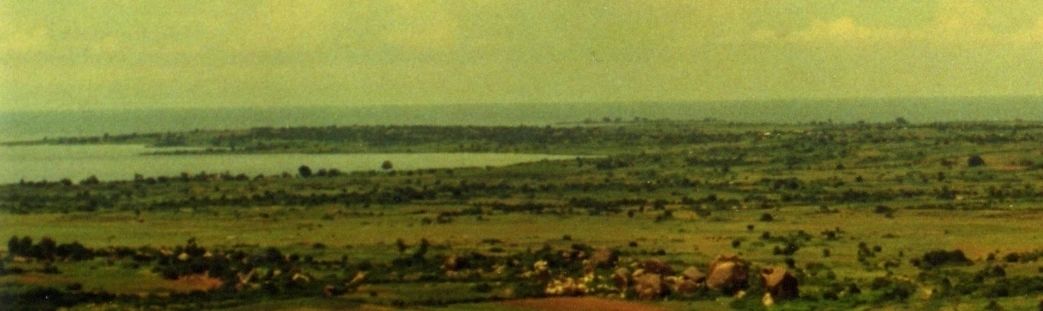
From a local founding in Shirati to a platform for rural health, research, education and development — told in five chapters.
SHED Foundation was established in 2005 by local leaders — Rev. Manaen Ngaji Kawira, Josiah Kawira and Capt. Josiah Ogada Magatti as founding directors, joined by founding members including Jared Okombo and founding-era medical leader Dr. Esther Kawira — who believed health, education and development had to advance together. Registered as a not-for-profit company on 24 January 2006 and granted NGO status on 21 March 2006, SHED opened Sota Health Clinic in 2006 and began the partnership with Village Life Outreach Project that would shape everything that followed: community outreach, mobile medical teams, and the first education and infrastructure projects in Roche, Nyambogo and Burere.
During its second decade’s first half, SHED helped develop Roche Health Center into an enduring rural facility, constructed a permanent home for Sota Clinic — supported in part by the Burkitt’s Lymphoma Fund for Africa — and expanded school nutrition, scholarships and school construction. SHED entered major international research through the EMBLEM Burkitt lymphoma study with the U.S. National Cancer Institute, NIH, Bugando Medical Centre and partners across East Africa, with Dr. Esther Kawira as Tanzania’s principal investigator. University partnerships deepened: Duke students ran the 2013 schistosomiasis health-education campaign in Roche, Burere and Nyambogo, and medical teams from the University of Cincinnati, USC/Keck, Connecticut, James Madison, Touro and Oregon contributed clinical education and infrastructure design.
SHED’s programs began operating as one system: health facilities, water infrastructure, school nutrition and university exchanges reinforcing each other. With Village Life, Engineers Without Borders–UC and village committees, clean-water systems advanced across Roche, Nyambogo and Burere, supplying schools, health facilities and community distribution points under local management. Direct Relief’s 2009 consignment of donated medicines — wholesale value over $425,000 — exemplified how SHED’s clinical infrastructure let international donations reach rural patients directly. Public-health collaborations with APHFTA, USAID-supported programming, PEPFAR-network activities and Jhpiego connected SHED’s field presence to national health priorities.
Through the COVID-19 pandemic and its aftermath, SHED kept health care, nutrition, education, water and community programs running. New infrastructure arrived: the reproductive and child health facility developed with Village Life, expanded maternal and child health capacity at Roche Health Center, and the 2023 four-party academic framework linking CUHAS, the University of Cincinnati, Village Life and SHED for cross-cultural health education and collaborative research. Sickle-cell screening and clinical services — developed with Shirati KMT Hospital, where SHED supports funding, donor engagement and oversight — opened a new chapter of sustained-care programming.
Today SHED enters its third decade with permanent facilities, long-standing community relationships and an unusually broad network of partners. The current work is institutional: strengthening governance, documenting impact, preserving history, and building the reporting and grant systems that convert twenty years of experience into larger partnerships — while keeping rural communities at the center.
Hear the story of SHED’s work and its partnership with the communities of northern Tanzania.
SHED founded by local leaders in Shirati.
Registered January; NGO status March; Sota Health Clinic opens; Village Life partnership begins.
Direct Relief medical consignment (wholesale value over $425,000).
Roche Health Center developed; Sota permanent facility; EMBLEM research; water systems in Roche, Nyambogo, Burere.
Duke schistosomiasis health-education campaign.
CUHAS–UC–Village Life–SHED academic framework; reproductive and child health facility.
Sickle-cell program with Shirati KMT Hospital; third-decade institutional strengthening.